FROM SCREEN TO NOVEL WORKSHOP
Sitting on a stack of unproduced screenplays?
Create a new outlet for your story by turning your screenplay into a novel!

Six weeks · 5 writers · $900
This Workshop offers
– an introduction to novel story elements
– accountability to write your story for a new medium.
– freedom to write in a different way.
– breaking from old habits.
– feedback on your writing.
Experience the fun of
– dressing the set yourself.
– choreographing characters.
– developing characters readers can imagine and want to follow.
– writing conversations readers can hear in their mind.
– guiding readers through time and space.
– revealing hidden intentions.
The question is not whether you know how to tell a story.
The question is:
Do you want to learn new tools to get your story out there?
A screenplay isn’t the only way to tell your story.
Why write a book?
The movie making industry
– favors stories based on bestselling books.
– seeks revenue for its movies in the book market.
Novel writers
– get to dress the set themselves.
– are in charge of bringing their imaginary world to the reader.
Experience the freedom of a new medium
&
Bring your story back to life!
Ready to dust off an old script?
Tell me a little about your screenplay.
Once you submit the form, you’ll be taken to a page with more details about the workshop, including the schedule, what’s included, and the $900 tuition.
From there, you can reserve your seat.
This is for you if …
- You are ready to write a book.
- You have written a screenplay and want to turn it into a novel.
- You want to create an image directly in a reader’s mind.
- You want to expand your skill set to become a better storyteller.
- You love the inspiration a group setting generates.
This Is not for you if …
- You want AI to transfer your screenplay into a novel.
- You don’t want to learn from human beings.
- You are looking for a shortcut, an easy tool to do the work for you.
- You don’t think it’s fun to learn something new.
- You hate reading books.
Why work with me?
I offer screenwriters a different perspective woring for on an entirely different medium, a book.
It’s about reimagining the story, creating the depth, interiority, and narrative experience that only a book can offer.
My career has taken me through journalism, screenwriting, and book coaching in both Germany and the United States.
I worked for twenty years as an independent filmmaker, photographer and editor.
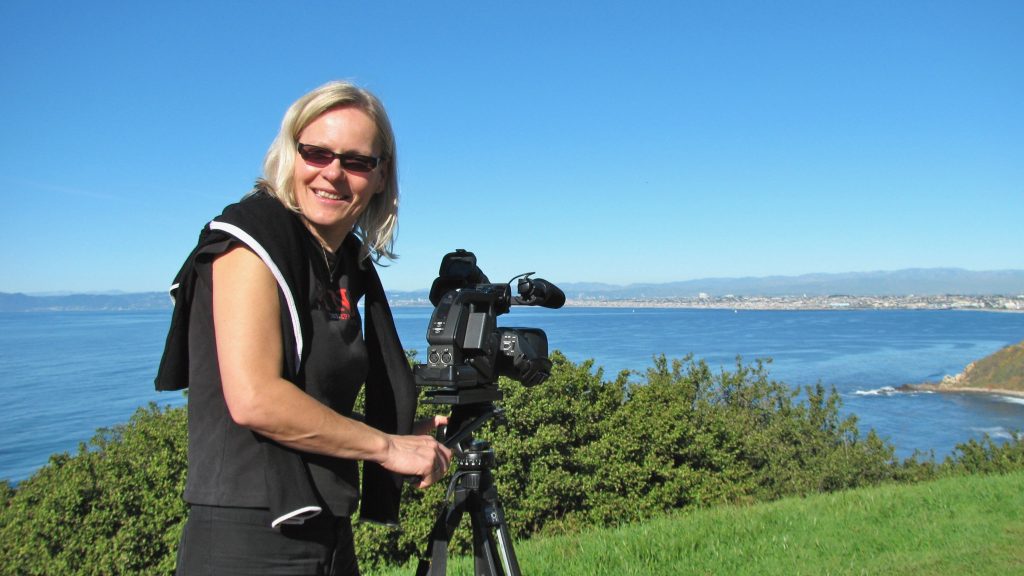
My passion is helping screenwriters understand what changes when their story moves from the screen to the page.
Here's what writers who work with me say.
Six Week Workshop for Screenwriters
This workshop is for screenwriters who want to learn new skills in the company of their fellow writers. We look at beats from successful screenplays and transform them into scenes for a novel. Participants are welcome to use their own screenplay to work on during class.
Writers* work together Tuesdays, 12 PM to 1:30 PM Pacific
October 13th to November 17th, 2026
* Limited to five seats.
$900
Interested in working with me?

Have a look at the six group sessions covering novel story elements you never see in a screenplay.
Here's what you learn
Narration
- Voice over in screenplays is frowned upon, but novels need a strong voice guiding the reader.
- In a novel you chose between different points of views. You will decide which voice is right for the narration of your story: First-person, second-person, third-person omniscient or close third.
Thoughts and Feelings
- In a screenplay a writer is limited in their expressions of the inner turmoil of a character. In a novel the writer reveals a character’s dreams and fears.
- Become comfortable to write about thoughts, feelings and intentions to give the reader a character’s motivation.
Choreography
- The writer does the blocking, not the director or cinematographer.
- You have to describe the movement of your characters within their given circumstances. You’ll choreograph their interaction on the page, balancing visuals of the environment, reactions, and dialogue in the narration of your story.
Transition between
Time and Space
- Screenplays consist of consecutive scenes under a Scene heading with no transitions between.
- In a novel the writer has to make sure the reader stays in the story when moving to a new location or to a different time.
- You will learn to transition from scene to scene, chapter to chapter.
Dialogue
- In a novel dialogue needs a careful set up so a reader won’t lose track of who’s talking.
- The writer, not the director, not the actor nor the editor, is responsible for pacing and delivery.
- Learn about visual cues to indicate if someone is thinking to themself or talking to someone and to whom.
Interiority
- With a screenplay it is up to the actor to imagine the circumstances under which they behave so the audience can empathize with them.
- You will learn about the importance of interiority and how to use it to build momentum and suspense.
- Deepen your scope of expression by embracing interiority in your writing.
Frequently Asked Questions
Does this workshop require me to purchase specific software?
No. You do not have to learn software. You can write with a pencil if that is what you usually do. Eventually you will have to share your work and the standard software used for that is Word. For this workshop you can use pages or simple text or write in your google form. Just make sure to tell any software you use NOT to correct your written words. We want to learn from each other and not from a machine.
Does this workshop help me transform their finished screenplay?
Yes. It is the purpose of this workshop to show you the many story elements a novel writer gets to play with. You are welcome to share beats of your own script as you write scenes for your book using the tools of a novel writer.
What happens after I send the form?
You’ll be taken directly to the page where you can reserve your seat in the six-week workshop. Your seat is confirmed when payment is received.
I already have a screenplay. Why would I turn it into a novel?
A screenplay and a novel tell stories differently. A screenplay relies heavily on what can be seen and heard, while a novel gives you access to a character’s thoughts, feelings, memories, perceptions, and inner conflicts. Turning your screenplay into a novel can give you room to explore parts of the story that were never possible on the screen.
Can I use my existing screenplay as the starting point for a novel?
Absolutely. You don’t have to start from scratch. Your screenplay already contains characters, situations, relationships, conflicts, and story beats that you can draw from. The workshop helps you understand how to translate that material into prose and discover what needs to change along the way.
How different does a screenplay need to be when it becomes a novel?
Very different in some ways, and surprisingly familiar in others. The story may remain recognizable, but the way you tell it changes. In a novel, you have choices about narration, point of view, interiority, description, pacing, transitions, and how the reader experiences time and place. The workshop focuses on those differences.
I’m used to writing visually. How do I write what’s happening inside a character?
This is one of the biggest opportunities in moving from screenwriting to fiction. A novel allows you to show what a character thinks and feels rather than relying only on behavior to communicate it. We’ll explore ways to bring the character’s interior experience onto the page without simply explaining everything to the reader.
Do I need to know how to write fiction before I take the workshop?
No. You already know how to tell a story, create characters, build scenes, and think dramatically. What you may not know yet is how those skills translate to the novel form. The workshop gives you a practical way to work with the material you already have while learning the elements that are specific to fiction.
What if my screenplay is too short to become a novel?
The screenplay is a starting point, not a word-for-word blueprint. A novel may need more than the screenplay contains because prose can explore a character’s inner life, deepen relationships, expand the world, and move through moments that would never appear in a script. We’ll look at where that additional material can come from without simply padding the story.
What if I don't want to turn my screenplay into the exact same story?
You don’t have to. Writing the novel may reveal possibilities that weren’t available when you were writing the screenplay. You can use the existing beats as a foundation while reconsidering point of view, character, scenes, chronology, and even what the story is ultimately about.
Will I actually write during the six weeks, or is it mostly instruction?
The workshop combines teaching with writing exercises and feedback. You can work from your own screenplay beats as you learn, so you are not simply listening to someone explain how novels work. You’ll actively explore the opportunities opening up to you and you’ll practice a new way of writing and you’ll receive feedback during the workshop.
What if I’m attached to the screenplay version of my story?
That’s completely understandable. You spent time developing those characters and scenes for a particular form. The goal isn’t to throw that work away. It’s to discover what happens when you give the story the freedom and tools of a novel. Sometimes the screenplay provides a strong foundation; sometimes the novel reveals a different layer of the story.
I’ve been thinking about writing a novel from my screenplay for years. What would I actually get out of six weeks?
You’ll leave with a much better understanding of how to approach the novel and how your existing material can work in prose. Across the six weeks, we’ll work with narration and point of view, thoughts and feelings, choreography, transitions through time and space, dialogue, and world building. You’ll also have writing exercises, verbal and individual feedback, and the opportunity to work alongside a small group of other screenwriters making the same transition.